Pool Cage Door Repair & Replacement in Tampa
The door takes more abuse than any other part of a pool cage — opened and closed a dozen times a day, leaned on, kicked by kids, slammed by wind, and baked by Florida sun. When hinges corrode, closers die, latches stick, or the frame racks out of square, the whole enclosure stops doing its job. We repair and rebuild pool cage doors across Tampa Bay, usually in a single visit.
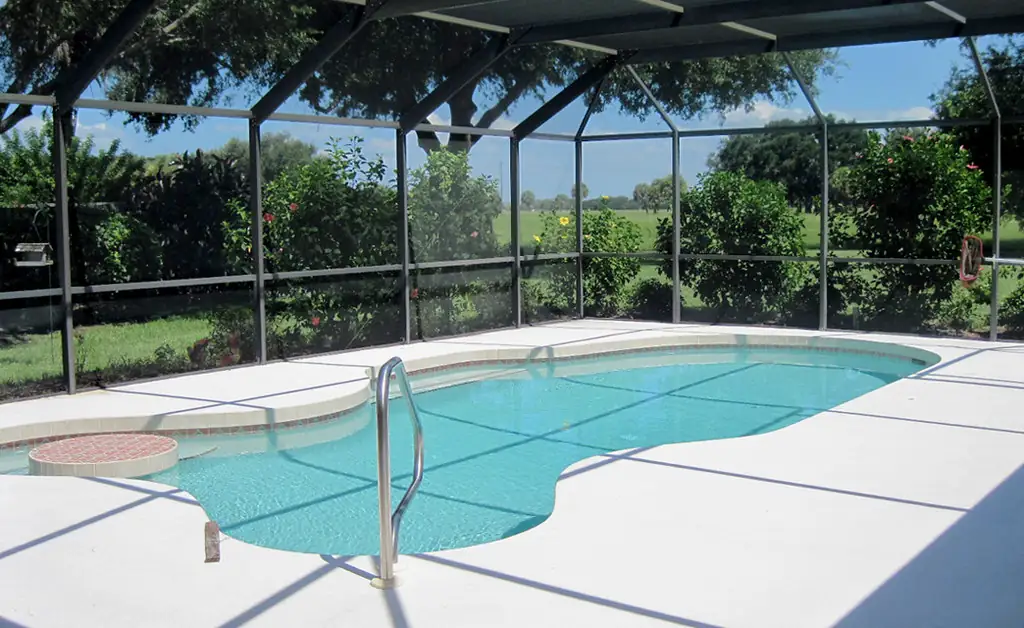
Common Pool Cage Door Problems We Fix
After hundreds of door calls across Tampa, Clearwater, and St. Pete, the failure modes are remarkably consistent. Here's what goes wrong and why:
Sagging and dragging
The classic complaint: the door scrapes the ground, sticks, and needs a shoulder-check to open. The cause is almost always hinge failure — a pool cage door hangs on just two or three hinges carrying a tall, wide aluminum frame, and once one hinge loosens, strips, or corrodes, the whole door racks and the bottom corner drops. Salt air makes this worse fast in coastal areas like Clearwater Beach, Tierra Verde, and Gulfport. Replacing the hinges and re-squaring the frame fixes it for good; grinding the bottom of the door (the handyman special) just masks a geometry problem.
Dead closers and sticky latches
The hydraulic or spring closer that should swing the door shut dies a slow death — first it slams, then it drags, then it holds the door open entirely. Florida's pool safety barrier rules require enclosure doors to be self-closing and self-latching, with the latch out of a small child's reach, so a dead closer isn't just annoying: it's a code compliance issue, and it matters most in households with young kids or grandkids visiting. Latch mechanisms also gum up with pollen, corrosion, and dried-out lubrication. We replace closers, rebuild or replace latches, and test the door's swing and latch engagement before we leave.
Torn lower panels and pet damage
The bottom two feet of a door take everything: dog claws scratching to get out, kids kicking it open, patio furniture bumping it. Standard fiberglass screen in a door's lower panel is living on borrowed time in a house with pets. The fix that actually holds: pet-resistant screen in the lower panel (roughly 7× stronger than standard mesh) and, for serious offenders, an aluminum kick plate on the bottom section. We install kick plates to match your frame color.
Bent and racked frames
Storm gusts grab a loose door like a sail, ladders get leaned against them, and kids hang on them. Aluminum cage doors bend — the question is whether they're worth straightening. Mild bends straighten fine: we pull the door, work it true on a jig, and re-hang it square. Frames that are creased at the corner joints, cracked, or bent in two directions won't hold alignment, and straightening them is a temporary fix at best. Those get a new custom-built door.
Door Repair vs Full Door Replacement
Honest guidance: most door problems are repair jobs. But there's a line where rebuilding costs more than replacing:
| Condition | Recommendation | Typical cost |
|---|---|---|
| Hinges, closer, or latch failed; frame straight | Repair — replace the failed hardware | $120–$250 |
| Door drags; mild racking or bend | Re-hang, re-square, new hinges | $150–$300 |
| Screen torn (lower panel), frame fine | Rescreen with pet-resistant mesh; add kick plate | $100–$250 |
| Frame creased, cracked, or bent in two directions | Full custom door replacement | $450–$900+ |
| Mismatched replacement door from a prior handyman job | New door built to match cage profile | $450–$900+ |
A new door is custom-fabricated to your cage's exact aluminum profile, color, and opening size — pool cage extrusions vary by manufacturer and era, and an off-the-shelf door never fits right. We match the frame profile, powder-coat color, and screen type to the rest of your enclosure so the new door looks like it was always there. Pair it with a screen replacement if the rest of your panels are aging, and the whole cage gets a fresh start.
What Door Repairs Cost in Tampa Bay
Pricing is straightforward because door work is standardized — the variables are hardware quality and whether the frame needs replacement:
| Service | Typical range |
|---|---|
| Service call & diagnosis (credited toward repair) | $75–$95 |
| Hinge replacement (set of 3, stainless) | $120–$200 |
| Door closer replacement | $90–$160 installed |
| Latch / lock repair or replacement | $100–$180 |
| Re-hang and re-square dragging door | $150–$300 |
| Door rescreen (pet-resistant lower panel) | $100–$250 |
| Aluminum kick plate (lower panel) | $60–$120 installed |
| Full custom door replacement | $450–$900+ |
Most door repairs land between $120 and $350 and are done in one visit — we carry the common hinges, closers, latches, and screen types on the truck. Custom door builds take a few days for fabrication and matching. Full pricing context lives on our main pool cage repair page and our guide to pool cage screen repair costs in Tampa.
How We Repair a Pool Cage Door
Door work looks simple and isn't. A door that swings, closes, and latches correctly is a geometry problem — everything has to be square, plumb, and tensioned in relation to everything else:
1. Diagnose the real failure
We check the hinges, the frame's squareness, the closer tension, latch engagement, and the strike alignment — plus whether the surrounding cage structure has shifted (after a storm, the door is often fine and the post it's hung on has moved). That five-minute diagnosis decides whether it's a $150 hinge job or a door replacement.
2. Replace failed hardware with stainless
Hinges, screws, and fasteners get stainless or coated replacements — Tampa's humidity and salt air eat plain steel fasteners in a couple of years, and corroded fasteners are what start most sagging problems. We never reuse a stripped hinge or a closer that's lost its tension.
3. Re-square, re-hang, and tune the swing
The door goes back on square, the gap lines are even all around, and the closer is tuned so the door shuts firmly without slamming — then the latch engagement is tested a dozen times. Florida code wants that door self-closing and self-latching every single time, not nine out of ten.
4. Screen and kick plate (when needed)
If the lower panel's been the pet crime scene, we rescreen with pet-resistant mesh and add a kick plate to match your frame color. The rest of the cage can be rescreened at the same visit — see our screen replacement page.
Keeping Doors Working in Florida's Climate
Three things kill pool cage doors here: corrosion (salt air near the coast, humidity everywhere), UV (which makes fiberglass brittle and fades powder-coat), and wind (storm gusts and daily sea breezes that slam an unlatched door). The maintenance routine is short: rinse salt and pollen off the hinges and latch with a garden hose a few times a year, hit the moving parts with a silicone-based lubricant (not WD-40, which washes out), and call us the week you notice dragging or a lazy closer — a $150 hinge job ignored for a year becomes a $700 door replacement. Doors in coastal Clearwater and St. Pete need stainless hardware from day one; inland Tampa can run standard coated hardware with regular maintenance.
Related Services
- Pool Cage Repair — our main hub: structural repairs, frame straightening, and fasteners.
- Screen Replacement — full and partial rescreens with pet-resistant, no-see-um, and solar mesh options.
- Storm Damage Repair — doors ripped off hinges and bent frames after tropical weather, with insurance documentation.
- Cage Painting & Restoration — refresh a sound frame (doors included) to match a new screen install.
Service Areas
We repair and replace pool cage doors across Tampa Bay: Tampa, Clearwater, St. Petersburg, Brandon, and Riverview, FL.
Door Sticking, Dragging, or Won't Latch?
Most door repairs are done in a single visit — we carry the hinges, closers, latches, and screen on the truck. Call for a fixed quote before we start any work.
Frequently Asked Questions
Most door repairs run $120–$350: hinge and closer replacements on the lower end, latch and frame realignment in the middle. A full custom door replacement runs $450–$900+ depending on size and screen type. We diagnose on-site and quote a fixed price before any work starts.
Almost always hinge failure — pool cage doors hang on just 2–3 hinges carrying a tall aluminum frame, and once one hinge loosens or corrodes the whole door racks and the bottom corner drops. Salt air near the coast accelerates it. Replacing the hinges and re-squaring the frame fixes it permanently; grinding the door's bottom does not.
Mild bends — from kids, wind, or leaning ladders — usually yes: we remove the door, straighten it on a jig, and re-hang it square. Frames that are creased, cracked at the corners, or bent in two directions won't hold alignment and should be replaced with a new custom-built door matched to your cage's profile.
Pet-resistant screen for the lower panel — it's roughly 7 times stronger than standard fiberglass and survives dog claws, kid kicks, and patio furniture bumps. Many Tampa homeowners also add a metal kick plate. Standard 18x14 fiberglass is fine for the upper panels where nothing touches it.
Yes — Florida's pool safety barrier rules require pool enclosure doors to be self-closing and self-latching, with the latch out of a small child's reach. If your door's closer is dead and the door stays open, it's not just annoying — it's a code compliance issue, especially in households with young children.
Most door repairs — hinges, closers, latches, realignment — take 30–60 minutes, and we carry the common parts on the truck, so it's usually done in a single visit. Full custom door builds take a bit longer: we measure, fabricate to match your cage's exact profile, and install, typically within a few days.