Pool Screen Types Compared: Fiberglass vs Polyester vs Pet-Resistant
Not all pool cage screen is the same — and in Tampa Bay, where noseeums swarm at dusk, afternoon storms hurl debris, and the sun never takes a day off, your mesh choice decides how long the screen lasts and how your enclosure feels to live with. Here's the honest comparison we walk homeowners through before every rescreen.
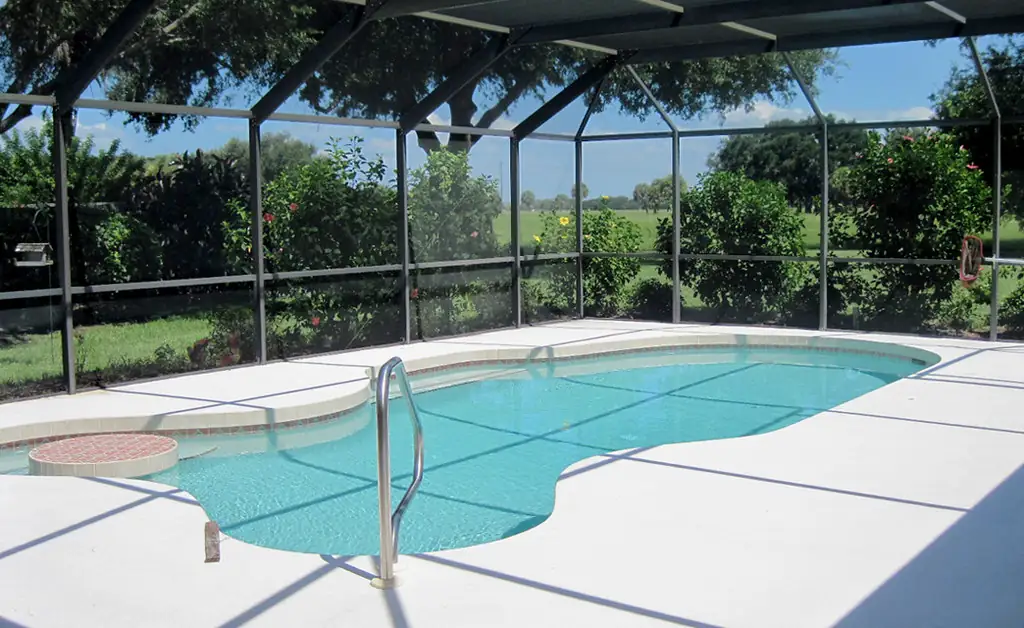
Standard 18x14 Fiberglass Screen — the Default
This is the screen on most Florida pool cages: vinyl-coated fiberglass mesh with 18 strands per inch in one direction and 14 in the other. It's the default for good reasons — it keeps mosquitoes and flies out, preserves your view and airflow, and it's the most affordable mesh per roll. In Tampa Bay, standard fiberglass lasts roughly 10–15 years before UV brittleness takes over and it starts tearing at the spline line or popping out of the channels. If your priorities are cost and clarity, and you don't have pets shredding the lower panels or noseeum problems, 18x14 is a perfectly good choice.
20x20 No-See-Um Screen — for the Dusk Biters
Noseeums (biting midges) are smaller than mosquitoes and sail right through standard 18x14 mesh. If you live near water, mangroves, or retention ponds — anywhere along Old Tampa Bay, Cockroach Bay, the Alafia River, or coastal Clearwater and Tierra Verde — you know the dusk swarm. 20x20 screen's tighter weave blocks them. The tradeoff is real but modest: slightly reduced airflow and a slightly dimmer view compared to standard mesh. The mesh itself costs more per roll, so expect a premium on the rescreen quote. Some homeowners compromise by installing 20x20 only on the dusk-facing and water-facing sides, with standard screen elsewhere.
Pet-Resistant Screen (Vinyl-Coated Polyester) — the Popular Upgrade
This is the upgrade we install most often. Pet-resistant screen is made of vinyl-coated polyester instead of fiberglass, and it's roughly 7 times stronger than standard mesh — dog claws, cat claws, bouncing balls, and patio furniture bumps that would shred 18x14 barely mark it. It's a heavier, slightly less transparent weave, so purists notice the difference looking through it, but most families stop noticing within a week. It typically adds about $1–$2 per square foot over standard mesh on a rescreen, and it usually outlasts standard screen by several years (12–18 years in Tampa Bay). If a dog, a cat, or a toddler lives in your house, this is the money well spent.
Solar and Privacy Screen — Taming the Afternoon Sun
Solar screen blocks 65% to 90% of the sun's heat and glare depending on the density you choose. Around a Tampa pool that's real money: less heat gain means a cooler deck and less chemical burn-off in the water, and south- and west-facing roof panels are the worst offenders. The denser 90% weaves also add daytime privacy from neighbors — people outside can't easily see in. The catch: 90% mesh noticeably dims the enclosure, so we usually recommend it for the sun-blasted roof panels only, with 65% or standard screen on the walls. If your pool feels like a sauna from May through October, a partial solar-screen install on the roof can change how you use the pool.
Which Screen Should You Choose?
Match the mesh to the problem you're actually solving:
| Screen type | Best for | Tampa lifespan | Relative cost |
|---|---|---|---|
| Standard 18x14 fiberglass | Cost, clarity, airflow; no pets or noseeum issues | 10–15 years | Baseline |
| 20x20 no-see-um | Homes near water/mangroves with dusk biters | 10–15 years | Moderate premium |
| Pet-resistant polyester | Dogs, cats, kids; lower panels and doors | 12–18 years | ~$1–$2/sq ft over standard |
| Solar / privacy screen | Sun-facing roof panels; heat and glare control | 10–15 years | Similar premium to pet |
The smartest money is often a mix: pet-resistant screen on the lower panels and doors where the damage happens, standard 18x14 above, and solar screen on the west-facing roof. You get the protection where you need it without paying premium mesh for every panel. We'll price the options side by side in your written quote so you can see exactly what each choice costs.
How Tampa Bay's Climate Wears Screen Out
Three things kill pool screen here. UV is the big one — Florida sun makes fiberglass brittle over a decade until it tears at the slightest pressure. Salt air near the coast corrodes the spline and fasteners holding the screen in, especially in Clearwater Beach, Tierra Verde, and Gulfport. And storm debris — palm fronds, oak branches, and windblown junk during tropical weather — punches holes that spread. Oak pollen and tassels in spring also cake the mesh and trap moisture. Watch for the warning signs: screen that pops out of channels, tears that keep growing, and mesh that crunches instead of flexing when you press it. Our guide to how long pool screens last in Florida covers what to look for on your next walk-around.
Related Services
- Screen Replacement — full and partial rescreens with the mesh of your choice, new spline in every channel.
- Pool Cage Repair — our main hub: structural repairs, door fixes, frame straightening, and fasteners.
- Storm Damage Repair — blown-out panels and bent frames after tropical weather, with insurance documentation.
- Cage Painting & Restoration — refresh a structurally sound frame to match your new screen.
Service Areas
We rescreen and repair pool cages across Tampa Bay: Tampa, Clearwater, St. Petersburg, Brandon, and Riverview, FL.
Not Sure Which Screen You Need?
We'll look at your cage, your sun exposure, and your household (pets included) and recommend the mesh mix that makes sense — then quote it itemized, in writing.
Frequently Asked Questions
Standard 18x14 fiberglass screen — vinyl-coated fiberglass mesh with 18 strands per inch one way and 14 the other. It's the default on most Florida pool cages because it balances visibility, airflow, and cost while keeping mosquitoes and flies out. In Tampa Bay it lasts roughly 10–15 years before UV brittleness takes over.
If you have dogs, cats, or young kids, yes — it's the most common upgrade we install. Pet-resistant screen is vinyl-coated polyester that's roughly 7 times stronger than standard fiberglass, so claws and roughhousing don't shred the lower panels. It adds about $1–$2 per square foot over standard mesh on a rescreen and outlasts standard screen by several years.
Slightly. The tighter weave blocks the tiny biting midges that slip through standard 18x14 mesh, but it does cut airflow and visibility a bit. Most homeowners near water or mangroves find the tradeoff worth it — no-see-um bites at dusk are miserable. Some homes use it on just the dusk-facing sides.
Absolutely — it's one of the smartest ways to rescreen. The most common combo is pet-resistant screen on the lower panels (where dogs, kids, and patio furniture live) with standard 18x14 above, and solar screen on the sun-facing roof. You get protection where you need it without paying for premium mesh everywhere.
Standard fiberglass screen lasts 10–15 years in Tampa Bay; pet-resistant polyester typically runs 12–18 years. The killers here are UV (which makes fiberglass brittle), salt air near the coast (which corrodes spline and fasteners), and storm debris. We price mesh options side by side in every written quote.
It depends on the density. Solar screens come in 65% and 90% sun-block options — 90% noticeably dims the enclosure and is usually installed only on sun-blasted roof panels, while 65% works as a whole-cage option. Most homeowners find 65% on the west- and south-facing roof keeps heat down without making the pool feel like a cave.