Pool Cage Screen Replacement & Rescreening in Tampa Bay
Rescreening is the single most common pool cage job in Tampa Bay — and the one where doing it right matters most. We replace tired, torn, brittle screens with fresh mesh, new spline, and corrosion-proof fasteners, so your enclosure looks new and stays bug-free for another decade-plus.
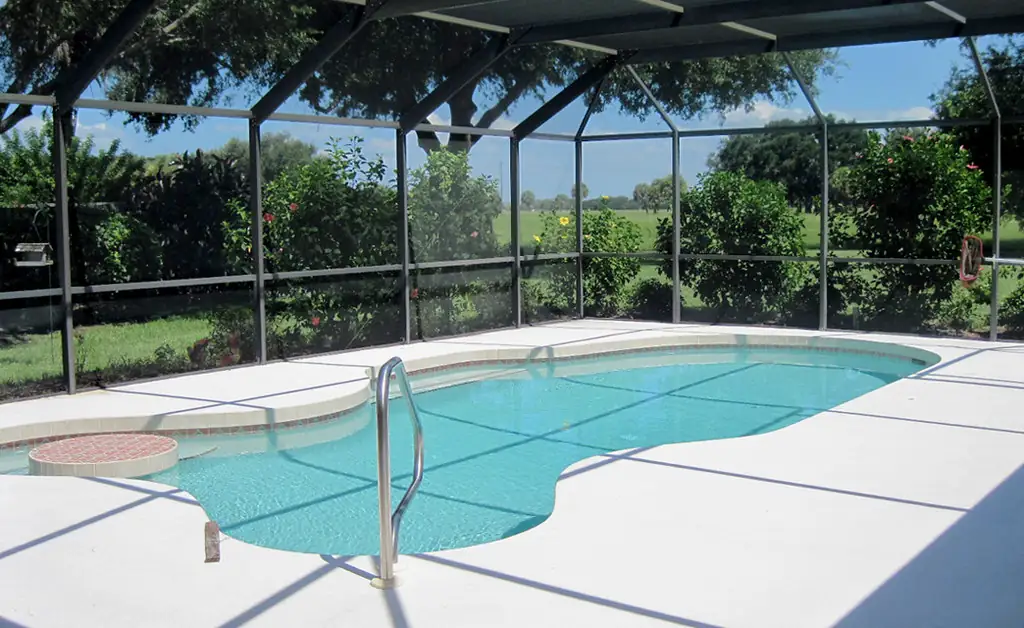
Full Rescreen vs. Partial Rescreen
Not every failing cage needs every panel replaced. Here's how we think about it on a quote:
Partial rescreen
If the damage is isolated — a branch took out two panels, the dog shredded the bottom of a door, one sun-blasted wall is splitting — we rescreen just those panels. It's priced per panel, done in a single visit, and makes sense when the rest of your screen still has years left in it.
Full rescreen
If your screens are 10+ years old and failing in multiple spots, a full rescreen is the better value. You get uniform new screen across the whole enclosure, fresh spline in every channel, and one consistent look instead of a patchwork of old and new panels. Most full rescreens on a standard Tampa pool cage take one to two days, and the typical price range is $1,500 to $3,000 depending on enclosure size, mesh choice, and whether we rebuild doors and replace fasteners at the same time. We'll always quote both partial and full so you can compare.
Choosing Your Screen Mesh
Mesh choice affects bug protection, airflow, visibility, and price. Here's what we install across Tampa Bay:
18x14 standard fiberglass — the default
18 strands per inch by 14. This is the standard pool cage screen across Florida: it keeps out mosquitoes, flies, and most insects while giving good airflow and visibility. For most homes, it's the right call and the most economical.
20x20 no-see-um mesh
A tighter weave that blocks tiny biting midges — the "no-see-ums" that make Florida evenings miserable, especially near water and mangroves. The tradeoff: slightly less airflow and a bit more visible screen. Popular with homeowners near the bay, canals, and retention ponds in Riverview and Brandon.
Pet-resistant screen
Heavier vinyl-coated polyester that stands up to dog claws and kids. We usually install it on lower panels and doors — where the abuse happens — rather than the whole cage, which keeps cost down while solving the actual problem.
Solar and privacy screen
Denser mesh that cuts heat and glare on west-facing walls and adds daytime privacy. It reduces airflow more than standard mesh, so we recommend it selectively — one hot wall, not the whole enclosure.
Phifer screen
We install Phifer brand screen — the industry standard for pool enclosures, known for consistent weave, UV stabilizers, and colorfastness. When a homeowner asks for "the good stuff," this is what we reach for. Beware bargain-bin screen from big-box stores: thinner coatings and inconsistent weave fail years earlier in Florida sun.
Spline and Fastener Replacement
A rescreen done right is never just screen. The rubber spline that wedges screen into the frame channel dries out, shrinks, and pops loose — usually on the sunniest walls first. We replace spline in every panel we touch, sized to your specific channel (too small and it blows out in a storm; too big and it cuts the screen during install). And because Tampa Bay's salt air eats standard screws, we swap corroded fasteners for stainless or coated hardware. Skip these two steps and a "new" rescreen starts failing in two summers.
How Long a Rescreen Takes
Most full rescreens: one to two days for a standard residential cage. Add a day for door rebuilds, full fastener replacement, or pairing the rescreen with cage painting and restoration. Partial rescreens — a wall, a door, a handful of panels — are same-day jobs. We schedule tightly and show up when we say we will; your pool stays usable throughout (we work around your swim schedule).
Pricing: What a Rescreen Costs in Tampa Bay
A typical full rescreen on an average-size Tampa pool cage runs $1,500 to $3,000. What moves you within — or outside — that range:
- Enclosure size: panel count is the biggest driver. Larger cages, taller walls, and multi-level roofs mean more screen and more labor.
- Mesh type: standard 18x14 is the baseline; 20x20 no-see-um, pet-resistant, and solar/privacy screens cost more per roll.
- Doors: rebuilding doors with new closers, latches, and pet-resistant lowers adds cost — and is worth it.
- Fasteners and hardware: replacing rusted screws across the whole cage adds material cost but prevents callbacks.
- Access: second-story walls and roof panels take longer and price accordingly.
Every rescreen quote is itemized and in writing, good for 30 days. No surprises on invoice day.
Signs Your Pool Cage Needs Rescreening
- Screen tears or splits at the slightest touch — it's gone brittle from UV.
- Screens ballooning or popping out of the channel — spline has failed.
- Multiple patched panels — you're spending more on patches than a rescreen would cost.
- Faded, discolored screen that makes the whole enclosure look tired.
- Bugs getting in despite "intact" screens — micro-tears and gaps at failing spline.
- Screen is 10+ years old — it's at or past its Florida lifespan.
If you're seeing two or more of these, call (813) 435-6556 for a free inspection. We'll tell you straight whether a partial rescreen will do or a full one is the smarter money.
Related Services
- Pool Cage Repair — our main hub: targeted repairs, door fixes, frame straightening, and the repair-vs-rescreen decision guide.
- Cage Painting & Restoration — pair a rescreen with fresh aluminum coating for a like-new enclosure.
- Storm Damage Repair — blown-out panels and bent frames after tropical weather.
- Lanai Screen Enclosures — rescreens and repairs for lanai roof panels, kick plates, and doors.
Service Areas
We rescreen pool cages across Tampa Bay: Tampa, Clearwater, St. Petersburg, Brandon, and Riverview, FL.
Get a Free Rescreen Quote
We'll count and measure your panels, check spline and fasteners, and leave a written quote — partial and full options side by side so you can decide.
Frequently Asked Questions
A typical full rescreen of an average Tampa pool cage runs $1,500 to $3,000, depending on enclosure size, the mesh type you choose, and whether door rebuilds and fastener replacement are included. Partial rescreens — one wall or a handful of panels — are priced per panel. Every rescreen starts with a free written quote.
18x14 is the standard fiberglass mesh: 18 strands per inch one way, 14 the other. It keeps out mosquitoes and flies and is the most common choice. 20x20 "no-see-um" mesh is a tighter weave that also blocks tiny biting midges common in Florida, at the cost of slightly reduced airflow and visibility.
Most full rescreens on a standard residential pool cage take one to two days. Larger enclosures or jobs that include door rebuilds, fastener replacement, and painting can run three to four days. Partial rescreens are usually done in a single visit.
New standard fiberglass screen typically lasts 10 to 15 years in Tampa Bay. Pet-resistant and polyester screens can last longer. South- and west-facing walls age fastest due to UV exposure, and coastal homes see faster fastener and spline wear from salt air.
Always. Reusing old spline is a false economy — it has already dried out and shrunk, and it will fail long before the new screen does. Every rescreen we do gets fresh spline sized to your channel, plus new stainless or coated fasteners where the old ones are corroded.
Yes. If the rest of your screen is in good shape, we rescreen just the damaged wall or panels. But if your screens are 10+ years old and failing in several places, a full rescreen is usually cheaper per panel than repeated partial visits — we'll give you both prices so you can decide.